
In the Invoices tab of a shipment, you can, among other options, create a new self-billing credit note and the incoming self-billing credit note. 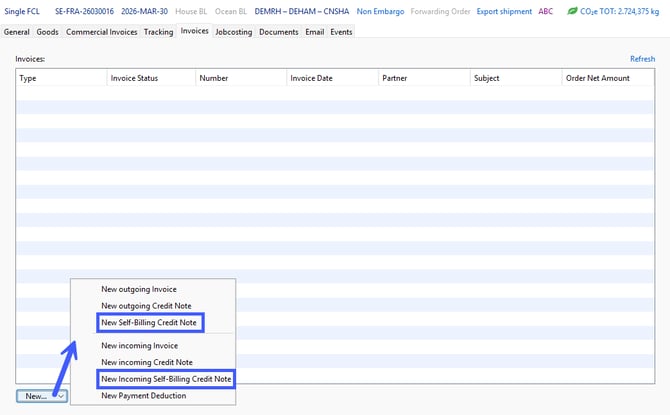
Self-Billing Credit Note
This is kind of a reversed invoice, frequently used for commission transactions, to book them correctly.
Example: You agree with the overseas agent that you will credit them a commission based on the profit of the export shipment. Since only you know the actual profit on the shipment, the agent cannot issue you an invoice, so you credit the commission to the agent yourself.
This is where the self-billing credit note is used. You can book the commission on the creditor side correctly as an expense, and the agent can book it on the debtor side as a credit in their accounts.
Incoming Self-Billing Credit Note
If you receive a self-billing credit note yourself, you can correctly post it on the debtor side using the incoming self-billing credit note. The entries in Scope are the same as for the usual recording of incoming invoices or incoming credit notes.